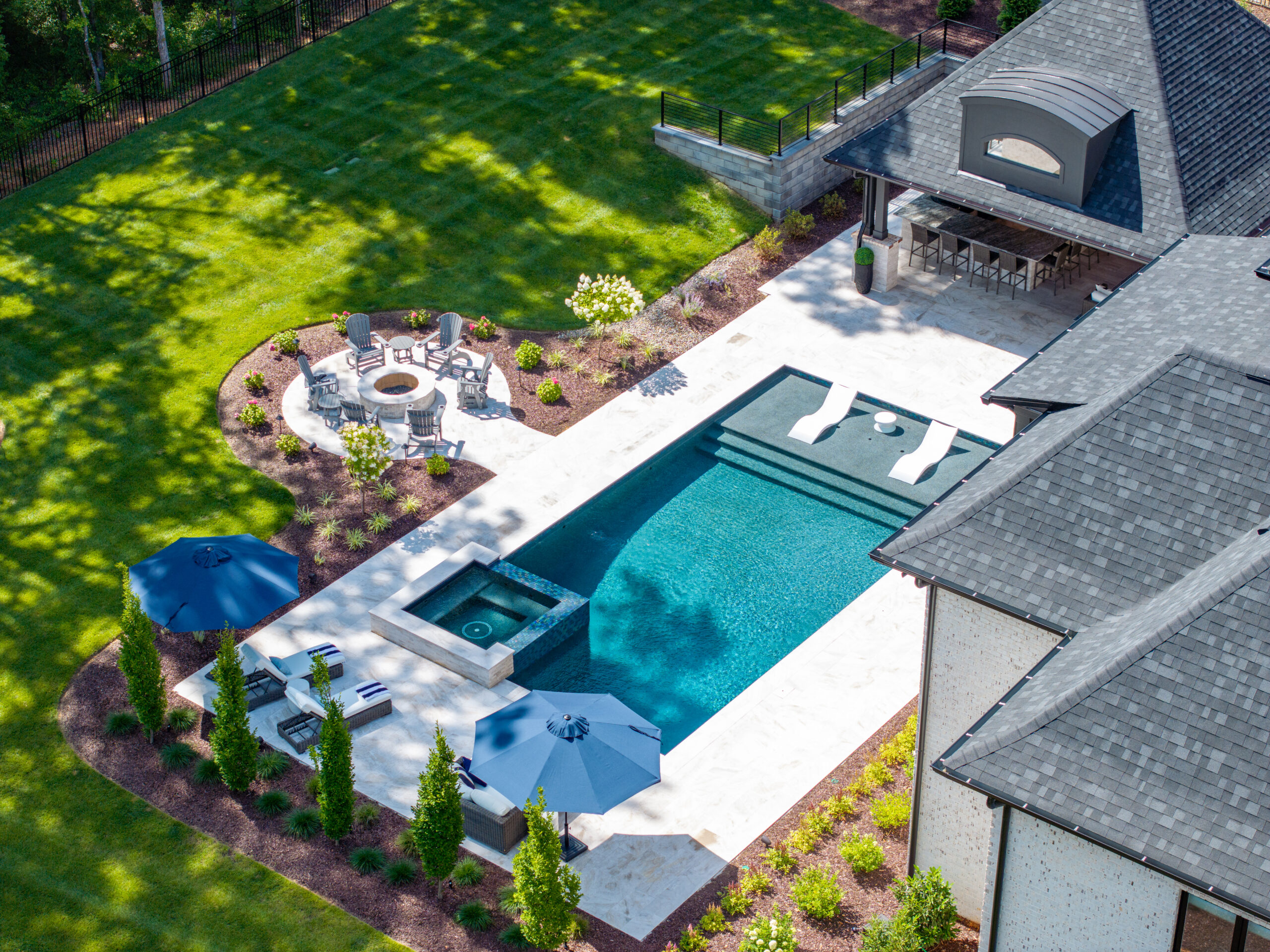
Installing a custom in-ground swimming pool is one of the most rewarding investments a homeowner can make to elevate their lifestyle, enhance property value, and create a private backyard oasis for gathering and relaxation. However, when starting a pool construction project, many homeowners focus primarily on the base cost of the pool shell itself. While selecting pool materials, shapes, and sizes is an exciting part of the design phase, the final cost of an in-ground pool project encompasses much more than just the pool basin.
In Charlotte, NC, and the surrounding metro areas, typical pool installation costs vary widely based on material selection, site access, yard topography, and custom add-on features. While vinyl liner pools generally range between $40,000 to $60,000 and fiberglass installations span from $55,000 to $85,000, high-end concrete (gunite) pools often reach upwards of $200,000 due to their superior durability, design flexibility, and longevity. The average Charlotte homeowner typically spends around $76,000 on a complete pool project.
To prevent surprise expenses down the road, it is essential to understand the hidden or frequently overlooked costs associated with custom in-ground pool installation. From initial earth-moving and site preparation to local permitting, utility tie-ins, hardscaping, and ongoing maintenance, proper budget planning requires a comprehensive, transparent look at the total scope of work. This guide breaks down the essential hidden costs of building an in-ground pool and provides strategic advice on how to plan your budget effectively.
1. Site Preparation, Grading, and Soil Conditions
Before excavation machinery ever breaks ground, your lot’s specific physical characteristics must be thoroughly evaluated. Site conditions represent one of the largest variables in pool construction costs, as preparing the land to safely support a heavy concrete or custom pool shell requires specialized site engineering.
Yard Slopes and Topography: Properties with steep inclines or dramatic changes in elevation require extensive grading, cut-and-fill excavation, or retaining wall construction to create a level building footprint.
Soil Types and Drainage: In regions like Gastonia and Union County, dense red clay soils retain moisture and require proper drainage infrastructure, gravel base layers, and structural engineered footings to prevent settling and erosion.
Site Accessibility: Ease of access for heavy excavation machinery impacts equipment transit costs. Narrow side yards, mature trees, power lines, or tight property boundaries can require smaller specialized machinery or manual labor, driving up preparation expenses.
2. Permitting, Inspections, and Environmental Regulations
Navigating municipal regulations and code enforcement is a critical step in the pre-construction phase. While necessary for safety and structural compliance, permits and inspections carry administrative and engineering fees that must be factored into your upfront financial planning.
Local Building Permits: County and municipal building departments (such as Mecklenburg, Iredell, Gaston, or Union counties) charge fees for structural, electrical, and plumbing permits.
Environmental & Buffer Compliance: Waterfront properties along Lake Norman or the Catawba River in areas like Mooresville, Cornelius, or Mount Holly are subject to strict shoreline buffer rules, impervious surface limits, and Duke Energy lake setback regulations. Meeting these environmental criteria may involve additional surveying, architectural adjustments, and specialized site planning.
HOA Architectural Submittals: Neighborhood Homeowners Associations (HOAs) often require formal architectural review packages, land surveys, and drainage impact reports prior to granting construction approval.
3. Pool Decking, Coping, and Hardscaping Integration
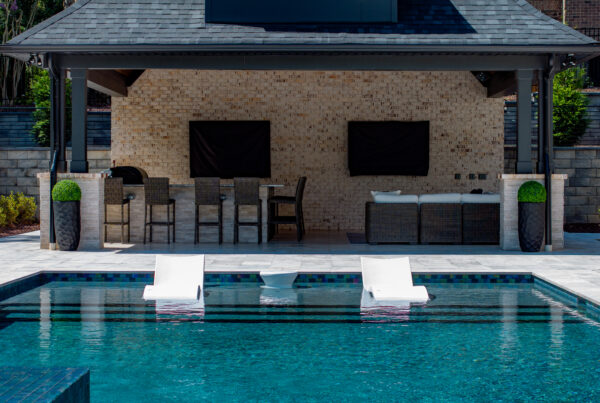
A custom pool cannot function as a standalone feature; it requires supportive decking, coping, and hardscaping to tie the structure seamlessly into your surrounding outdoor living space. The materials you choose for decking and borders significantly influence overall project expenditure.
Pool Decking Materials: Standard poured or stamped concrete offers an economical foundation, whereas high-end travertine, natural flagstone, or custom concrete pavers elevate aesthetics, safety, and heat resistance at a higher price point per square foot.
Pool Coping: The edging surrounding the pool water line—whether safety-bullnose brick, natural stone, or precast concrete—is essential for sealing the pool edge and maintaining watertight structural integrity.
Safety Fencing and Barriers: Building codes mandate surrounding safety fencing, self-closing gates, or pool cover systems to protect children and pets, which represents a mandatory secondary hardscaping expense.
4. Custom Features, Add-Ons, and Utility Hookups
Enhancing your pool with resort-style amenities is a popular choice for Charlotte homeowners looking to create an entertainer’s paradise, but add-on features will increase equipment and utility requirements.
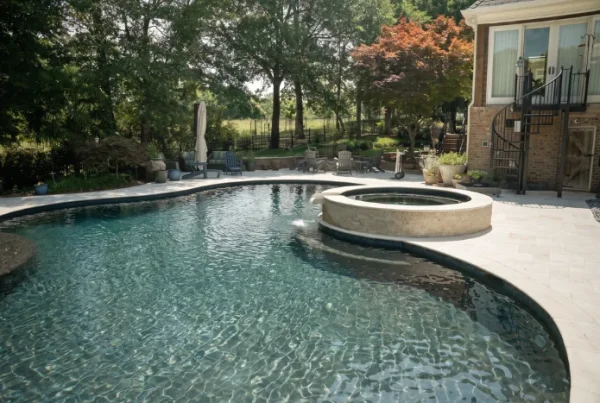
Water & Fire Features: Popular upgrades such as waterfalls, sheer descents, deck jets, integrated spas, gas fire pits, or decorative fire bowls add luxury but require additional masonry, pumps, and gas lines.
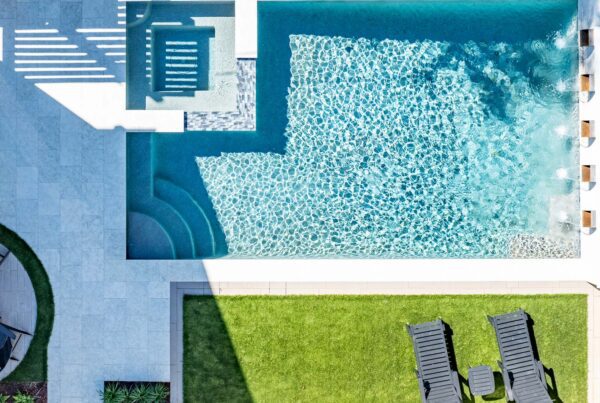
Tanning Ledges & Benches: Built-in shallow tanning ledges, sun shelves, and swim-up bar benches customize the swimming space but increase concrete shell complexity and material volume.
Utility Connections & Automation: Connecting high-efficiency pumps, LED lighting, automated control systems, pool heaters, and salt chlorination units to your electrical main or natural gas service requires licensed trade installations.
5. Ongoing Operational, Chemical, and Maintenance Expenses
Budgeting for a pool extends past the final construction walkthrough. Understanding long-term operational costs allows homeowners to maintain their investment smoothly over time.
Water Delivery & Initial Setup: Filling a newly constructed concrete pool with water and executing initial chemical balancing represents an immediate startup cost upon project completion.
Routine Maintenance: Modern smart automation and energy-efficient variable-speed pumps keep upkeep low—requiring as little as 10 minutes per week for basic chemical balancing—yet monthly water treatment chemicals, electrical power, and seasonal opening/closing tasks remain recurring investments.
How to Plan Your In-Ground Pool Budget Effectively
To protect your project from unexpected financial surprises and ensure seamless execution, consider the following strategic budgeting steps:
Work with a Full-Service Design-Build Contractor: Choosing a turnkey builder that manages every phase—from initial 3D design and lot evaluation to permitting, excavation, hardscaping, landscaping, and final water fill—eliminates trade miscommunication and hidden subcontractor markup.
Schedule an On-Site Consultation: Comprehensive site visits allow experts to evaluate slope grading, soil conditions, utility routing, and access pathways upfront, establishing an accurate, transparent quote before construction starts.
Explore Flexible Financing Options: Partnering with established pool financing providers allows homeowners to leverage structured payment plans, aligning project scope with long-term financial comfort.
Conclusion: Turning Your Pool Vision into Reality
Building a custom in-ground pool is an exciting journey that enhances family gathering space and adds lasting market value to your home. By recognizing hidden costs such as site grading, local permitting, hardscape integration, and utility setups early, you can plan a comprehensive budget that reflects your true total investment. Working with an experienced, award-winning custom pool builder ensures transparent pricing, realistic timelines, and a beautifully completed outdoor living space built to stand the test of time.