Choosing to install an in-ground swimming pool is one of the most rewarding outdoor living investments a North Carolina homeowner can make. Beyond adding recreation, relaxation, and aesthetic beauty to your backyard, a well-designed pool creates a central hub for family gatherings and entertaining guests. However, once you decide to build an in-ground pool, you face a pivotal structural choice: selecting the right pool material.
In North Carolina, the two most popular options for high-quality in-ground installations are gunite (concrete) pools and fiberglass pools. Both materials offer distinct advantages regarding initial installation costs, design capabilities, ongoing maintenance demands, and long-term property equity. Understanding how initial purchase price aligns with long-term maintenance value is essential for making an informed decision tailored to your lifestyle, property conditions, and financial goals.
Understanding the Fundamentals: Gunite vs. Fiberglass Construction
To evaluate cost and maintenance differences accurately, it is helpful to understand how each pool type is constructed and installed.
What is a Gunite (Concrete) Pool?
Gunite is a specialized mixture of cement, sand, and water sprayed pneumatically over a heavy-duty steel rebar framework. Because gunite is constructed on-site from the ground up, it offers virtually unlimited design flexibility. Homeowners can customize the shape, size, depth, and entry points of their pool without structural constraints. Once the concrete shell cures, a interior finish is applied. Traditional options include standard plaster, while luxury installations utilize premium pebble finishes such as PebbleTec. PebbleTec provides a non-abrasive, highly durable, UV-resistant surface compatible with both traditional chlorine and saltwater sanitization systems.
What is a Fiberglass Pool?
Fiberglass pools are pre-manufactured shell vessels crafted in a factory setting using multiple layers of fiberglass, resin, and a smooth outer gel coat finish. Once manufactured, the complete pool shell is transported via flatbed truck to the customer’s home, placed into an excavated site, connected to plumbing, and backfilled. Because the shell is produced beforehand, installation on-site occurs rapidly compared to traditional custom builds.
Initial Cost Comparison in North Carolina
When evaluating initial investment, the total price tag of an in-ground pool depends on pool size, site accessibility, excavation requirements, and surrounding hardscaping features like patios, coping, and decking.
Fiberglass Pools (Initial Investment): In North Carolina, initial costs for fiberglass pool installations typically range from $55,000 to $85,000 for standard packages. The lower initial price point stems from pre-molded factory manufacturing and shorter on-site construction timelines.
Gunite Pools (Initial Investment): Custom gunite pools represent a higher upfront investment. In Charlotte and surrounding NC areas, gunite pool projects typically start at a higher base and frequently reach $150,000 to $200,000+ for complete custom backyard builds. This price incorporates extensive design engineering, structural rebar framing, custom masonry, and surrounding high-end hardscapes.
Factors Influencing Upfront Expenses:
Customization and Scale: Gunite allows for expansive footprints, custom beach entries, infinity spillover edges, and integrated hot tubs, which increase upfront labor and material costs.
Transportation & Site Access: Fiberglass shells are limited in width by highway transit regulations (typically maximum 16 feet wide), whereas gunite construction accommodates restricted yard access or large lot dimensions without shipping boundaries.
Site Grading & Soil Engineering: North Carolina terrain often features sloped topography and heavy red clay, requiring custom structural footings or retaining walls that affect initial site preparation costs.
Long-Term Maintenance Requirements and Ongoing Costs
While fiberglass pools often have a lower initial cost, evaluating true overall value requires looking closely at lifetime upkeep, chemical consumption, and resurfacing obligations.
Routine Cleaning & Chemical Upkeep
Fiberglass Surfaces: The factory gel coat on a fiberglass pool is non-porous and smooth. This slick finish makes it difficult for algae to attach to pool walls, resulting in lower weekly chemical demand, reduced scrubbing, and lower routine chemical expenditures.
Gunite Surfaces: Standard concrete plaster surfaces are slightly porous, requiring consistent chemical monitoring and balanced water chemistry to prevent algae growth and staining. However, upgraded finishes like PebbleTec significantly reduce porosity, offering exceptional resistance to chemical wear, UV fading, and algae adhesion while preserving a natural stone appearance.
Resurfacing & Structural Longevity
Gunite Durability: Concrete pools are exceptionally durable structures engineered to withstand ground movement and heavy soil pressures for decades. Standard plaster finishes may require replastering every 10 to 15 years. Premium pebble finishes, such as PebbleTec, offer significantly extended longevity, protecting your structural shell for many years while maintaining an attractive finish.
Fiberglass Shell Repairs: The gel coat on fiberglass pools is durable but can experience spider cracking, surface scratching, or fading over time due to intense sun exposure and water chemistry imbalances. While fiberglass shells rarely need full resurfacing within their first 15 years, repairing damage or refinishing a gel coat requires specialized technicians and can be costly if structural shifts occur in heavy clay soil.
Design Flexibility and Backyard Integration
Your choice between gunite and fiberglass also shapes how seamlessly your pool integrates into your home’s outdoor living environment.
Architectural Customization
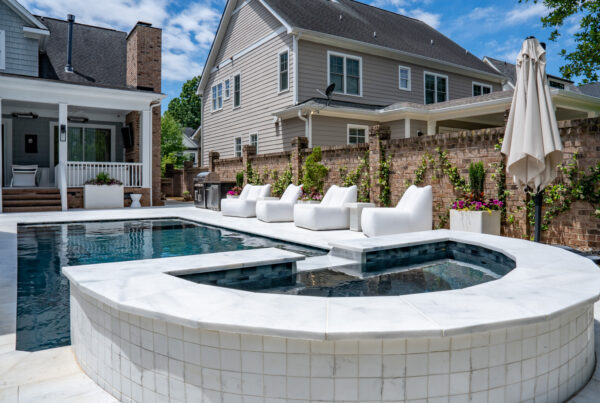
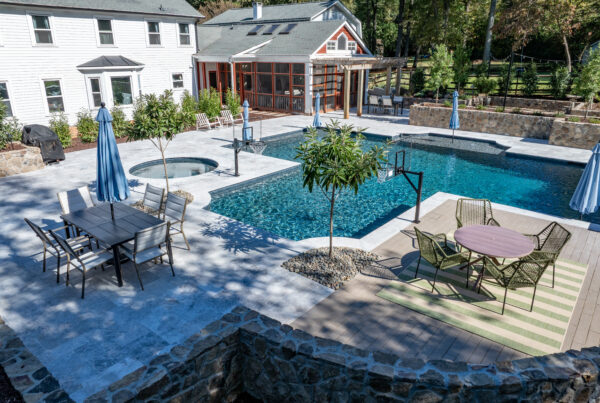
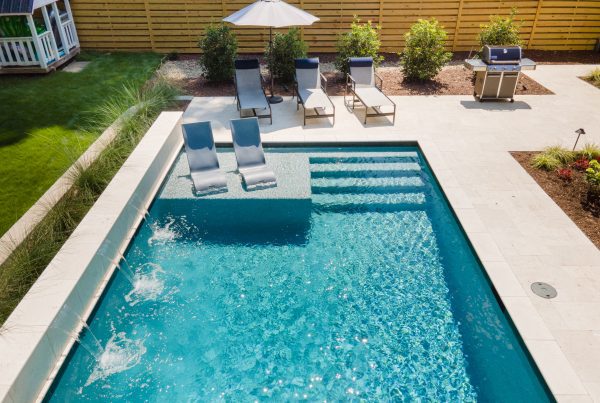
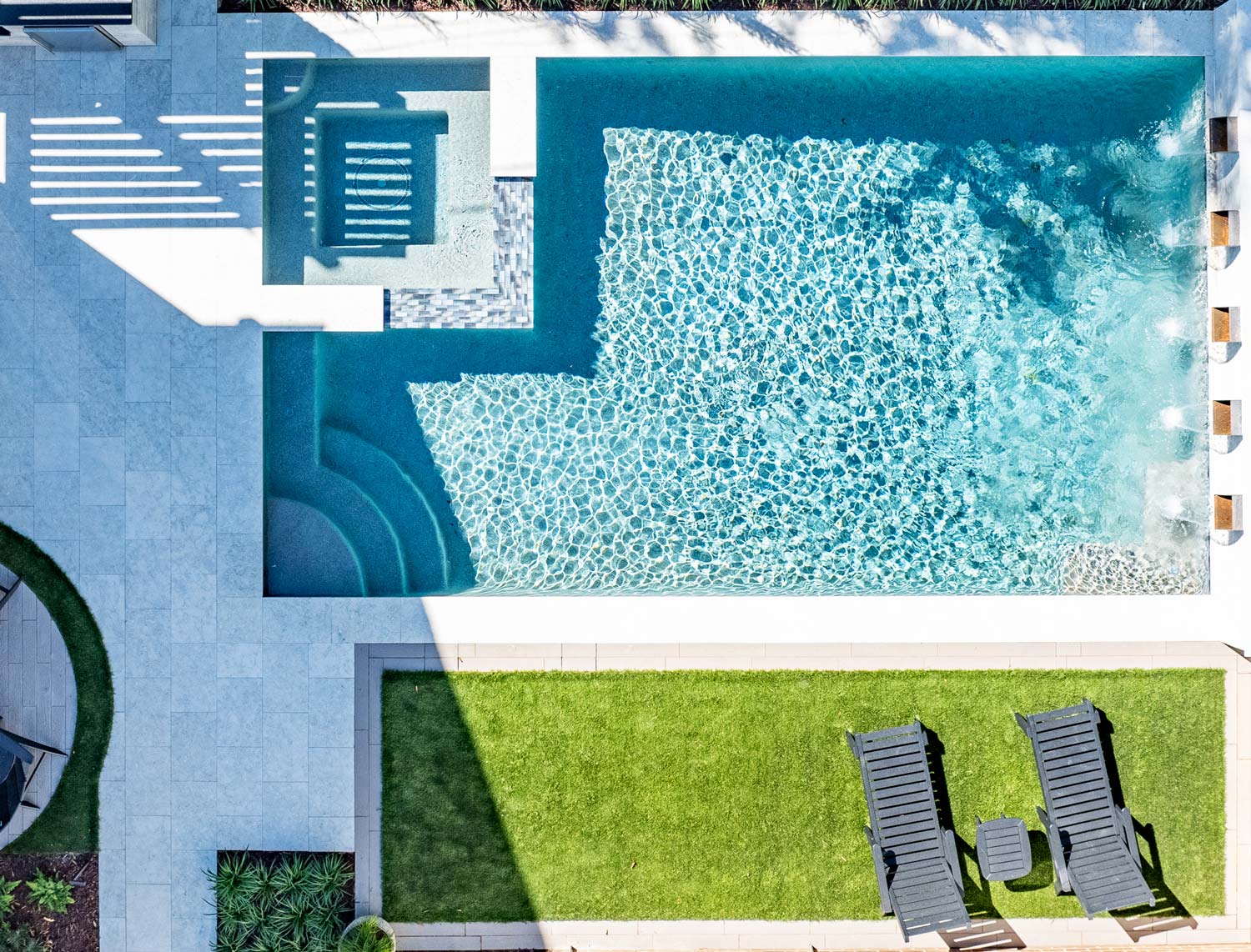
Gunite Pools: Offer total artistic freedom. Homeowners can design custom shapes (free-form, modern geometric, lap pools, or plunge hybrids), incorporate tanning ledges with bubblers, build swim-up bars, or add integrated spas with spillways. Gunite allows exact tailoring to match your home’s architectural style.
Fiberglass Pools: Homeowners select from a catalog of pre-designed shapes and dimensions. While manufacturers offer popular designs including rectangular and kidney layouts with built-in bench seating, custom alterations to dimensions, depths, or feature placement are not possible.
Outdoor Living Integration
A pool is rarely built in isolation. Custom gunite construction integrates seamlessly with surrounding hardscapes—such as travertine pavers, natural stone coping, outdoor kitchens, fire pits, and custom pergolas—creating a unified outdoor living space.
North Carolina Climate and Soil Factors
Building in North Carolina requires addressing regional soil characteristics and climate conditions:
Red Clay Soils: NC’s dense red clay expands and contracts with moisture changes. Gunite pools utilize heavy steel rebar frameworks (#3 and #4 rebar) and thick concrete walls engineered specifically to handle soil pressure without shifting or bowing.
Sloped Topography: Many NC properties feature sloped backyards. Gunite structures can be engineered with integrated retaining walls or raised beam walls to turn steep grades into striking architectural water features.
Year-Round Weather: Both materials handle NC’s hot summers and mild winters well, though salt-water conversion systems perform exceptionally when paired with high-quality pool equipment and durable shell finishes.
Conclusion: Making the Right Investment for Your Backyard
When deciding between a gunite and fiberglass pool in North Carolina, your choice ultimately comes down to your personal priorities for budget, customization, and long-term home value.
If your goal is a fast installation with lower initial costs and low routine chemical maintenance from fixed factory designs, a fiberglass pool offers a practical solution. However, if you desire a completely bespoke outdoor oasis—tailored specifically to your property’s layout, architectural style, and luxury feature preferences—a gunite concrete pool provides unmatched design freedom, structural strength, and lasting property equity.
By weighing upfront investment against long-term maintenance value, you can confidently choose the pool material that will bring years of enjoyment and lasting value to your North Carolina home.